In short
Inside your property, responsibility for a drain sits with the owner, or with the landlord if the property is let. Once a pipe joins the public sewer, Scottish Water is responsible for it. Shared pipes are less clear, because the answer depends on where they run. If you are not sure which side of the line your blockage is on, a camera check can help, so request a CCTV drain survey through the form.
Where your responsibility ends
Every property's drainage has two parts. The first is the private drain, which runs from the building to the point where it joins a public sewer. Citizens Advice Scotland says owners are responsible for household waste pipes up to that point. Since the pipe is private, they must arrange and pay for repairs.
The second part is the public sewer, the larger network that carries waste to treatment. Scottish Water maintains the public sewers, according to Citizens Advice Scotland. Under the Sewerage (Scotland) Act 1968, it also has a duty to provide the public sewers needed to drain its area, although the Act does not require anything that is not practicable at reasonable cost.
The practical problem is that you cannot see this boundary from the surface, because the pipes lie underground. A blocked drain in your garden, on your driveway or under a back green could sit on either side of the line. A CCTV drain survey shows where the fault sits along the run.
Shared drains between neighbouring properties
Not every property has its own pipe. Where one pipe serves more than one property, the rules are less simple, while two sources describe them in different ways.
Citizens Advice Scotland says the owners of a shared pipe are jointly responsible. It says the title deeds usually set out how to share the costs. However, Scottish Water's guidance, as summarised by Local Authority Building Standards Scotland, says a drain that leaves the property boundary becomes a public sewer. It says the same where a drain joins drains from another property.
The difference comes down to where the shared pipe runs. Inside one shared property boundary, the owners are likely to share the duty. Beyond it, however, the pipe may be a public sewer. Section 59 of the 1968 Act defines a drain as a pipe within the property serving one building, so a pipe that serves several properties is not a simple private drain.
A blockage in a shared run affects everyone on that run at once, because the waste has nowhere else to go. If a neighbour's sink is backing up, the fault may lie in the part that serves you too. Check your title deeds first, and ask Scottish Water if the pipe may be a public sewer.
Tenant or landlord
If you rent from a private landlord in Scotland, the repairing standard in the Housing (Scotland) Act 2006 applies. It says the structure and exterior of the house, including drains, must be in a reasonable state of repair and in proper working order. It says the same for the installations for sanitation. Ask your landlord or letting agent to arrange the repair, since the duty sits with the landlord.
Misuse, however, is a different matter. A blockage caused by wipes, fat or other items put down a drain may lead to an argument about cost. Check your tenancy agreement, and find out what is actually causing the blockage before anyone pays. A camera survey settles that with footage rather than guesswork.
If you rent from Dundee City Council, the council says to report blocked or defective drains in council houses to its Customer Service Team or any Housing Office. While that tells you where to report a fault, its page says nothing more about who pays, so ask the council.
How a survey shows where the fault sits
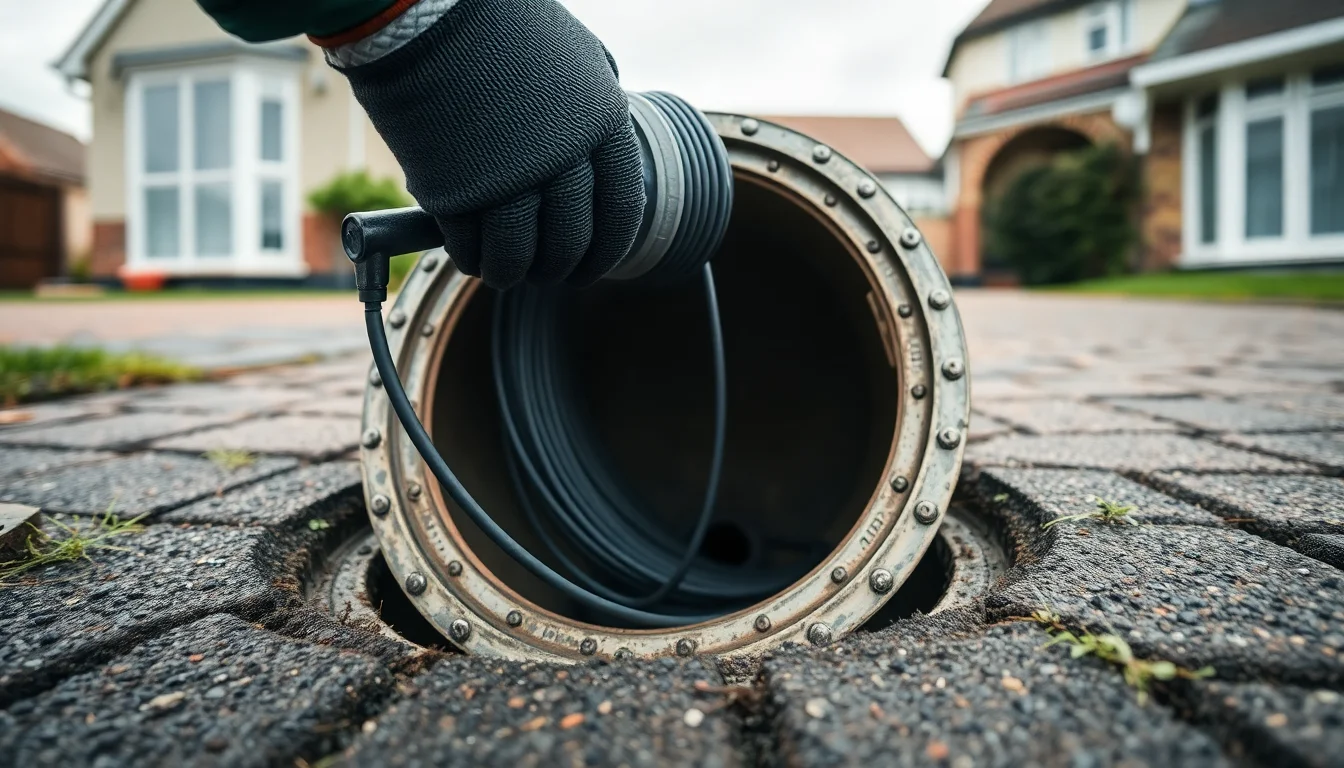
Rather than debate boundaries in the abstract, a survey gives you a factual answer. A camera run through the pipe shows where a blockage or fault sits along the run. That helps you judge whether it falls inside the boundary or beyond it, since the position decides who you contact.
This is useful anywhere that private pipes meet shared pipes or the public sewer. It helps in towns across Dundee, Angus, Perth and Fife, including drain help in Newport-on-Tay. It does not decide who owns the pipe. However, it gives the evidence you need before you contact anyone.
If the fault is in a public sewer
Citizens Advice Scotland says Scottish Water maintains and repairs public sewers. If a survey suggests the fault is in the public sewer, report it to Scottish Water rather than paying for a private fix. Citizens Advice Scotland adds that building insurance typically covers sewer-flooding damage. It also says you may be able to claim compensation from Scottish Water if it was negligent, although you should check your own policy.
Sewage that backs up into a home needs quick action, whoever owns the pipe. If that happens in Perth, the Perth emergency drain page explains what to send in a request.
Asking for help
This site is a request service for drainage work. You send your details through the form, and your request goes to an engineer who can respond. The engineer who takes your job runs a separate business. Since the engineer sets the price, the arrival time and any guarantee, agree all three before work starts.
If you want to know where a fault sits before you contact anyone, ask for a survey in your request, because the result may change who you contact. The site covers blocked drains across Dundee and into north-east Fife, including drain help in Tayport.
Council housing rules differ from one council to the next. Town pages give the details for each area, such as drain help in Perth and drain help in Forfar. For the Angus coast, see drain help in Arbroath.
Frequently Asked Questions
Blocked drains outside: who is responsible?
If the blocked section is a private drain on your property, you are responsible as the owner, or your landlord is if you rent. However, once the pipe joins the public sewer, Scottish Water is responsible.
Blocked sewer: who is responsible?
Scottish Water maintains the public sewer network. If a CCTV survey shows the blockage is in the public sewer, report it to Scottish Water rather than fixing it privately, because it maintains that network.
Tenant or landlord: who is responsible for a blocked drain?
Under the repairing standard, a private landlord must keep drains and sanitation installations in reasonable repair. Council tenants should report to the council. Misuse, however, is a separate question, so check your tenancy agreement.
What if the blocked drain is shared with a neighbour?
Citizens Advice Scotland says owners of a shared pipe are jointly responsible, and the title deeds usually set out how to share costs. If the pipe leaves the property boundary, however, it may be a public sewer. A survey shows where the fault sits.
How can I find out which side of the boundary my blockage is on?
The most reliable way is to look inside the pipe. A CCTV drain survey traces the run and shows where a blockage or fault sits, because the camera follows the pipe.